HEALTH RISKS ASSOCIATED WITH SCREEN USE

HEALTH RISKS ASSOCIATED WITH SCREEN USE

HEALTH RISKS ASSOCIATED WITH SCREEN USE

How prolonged exposure to artificial light can affect your body, not just your eyesight.

How prolonged exposure to artificial light can affect your body, not just your eyesight.

How prolonged exposure to artificial light can affect your body, not just your eyesight.

VISUAL FATIGUE

VISUAL FATIGUE

Digital eye strain is a set of ocular and neurological discomforts that occur after prolonged exposure to screens that emit artificial light, especially LED. It manifests as eye fatigue, blurred vision, burning, light sensitivity, and difficulty maintaining concentration.

Screens emit high-energy blue and green light that increases stress on the retina, reduces blinking, alters the stability of tears, and forces the eye to maintain close focus for long periods. When this exposure is repeated without protective measures, visual fatigue can intensify and become a persistent issue.
Group of men surfing

Reticare

Prolonged use of screens exposes the eyes to high-energy artificial light, causing them to exert continuous effort for which they are not designed.

Without appropriate protective measures, this repeated effort reduces visual comfort and may lead to persistent discomfort over time.

+600,000 Protected Screens

Group of men surfing

Reticare

Prolonged use of screens exposes the eyes to high-energy artificial light, causing them to exert continuous effort for which they are not designed.

Without appropriate protective measures, this repeated effort reduces visual comfort and may lead to persistent discomfort over time.

+600,000 Protected Screens

DRY EYES AND IRRITATION

DRY EYES AND IRRITATION

Dryness and eye irritation indicate a disruption of the tear film, which loses stability and leaves the surface of the eye exposed. This causes symptoms such as stinging, redness, unstable vision, and the sensation of a foreign body.

Prolonged use of screens interferes with the eye's natural defense mechanisms: it reduces blinking, accelerates tear evaporation, and increases oxidative stress from exposure to blue and green light. If this aggression is repeated daily, the eye loses the ability to recover, and irritation can become chronic, increasing the risk of developing dry eye syndrome in the long term.

Conclusion

The continued use of screens reduces the natural blinking of the eye and alters the tear film that protects it. This lack of lubrication leaves the ocular surface more exposed, causing dryness, itching, and irritation. When this situation persists over time, the eye loses its ability to recover, and discomfort can become recurrent without adequate protection.

Conclusion

The continued use of screens reduces the natural blinking of the eye and alters the tear film that protects it. This lack of lubrication leaves the ocular surface more exposed, causing dryness, itching, and irritation. When this situation persists over time, the eye loses its ability to recover, and discomfort can become recurrent without adequate protection.

Conclusion

The continued use of screens reduces the natural blinking of the eye and alters the tear film that protects it. This lack of lubrication leaves the ocular surface more exposed, causing dryness, itching, and irritation. When this situation persists over time, the eye loses its ability to recover, and discomfort can become recurrent without adequate protection.

HEADACHE AND MIGRAINES

HEADACHE AND MIGRAINES

The headaches associated with the use of screens are not coincidental; they are classified as functional headaches and are the direct result of an overload of the visual and neurological system. It is not just simple fatigue, but a defensive response of the nervous system to a visual stimulus that it perceives as too intense and sustained to be processed naturally.


In people with a certain predisposition, this overstimulation acts as a switch that can trigger or worsen migraine episodes, generating a hypersensitivity to light (photophobia) that makes it almost impossible to continue in front of the monitor.

Why does the screen act as a trigger? The problem is not just staring at something, but rather what we are looking at and how. Prolonged exposure to digital devices creates a "perfect storm" of stressors for the brain:


• Continuous blue light emission: High-energy light acts as a powerful neurological activator, saturating the visual pathways.

• Unending stimulation: We maintain a close and constant focus, without the natural pauses that the eye would have in an analog environment.

• Activation of pain areas: This sustained effort ultimately leads to excessive activation of the brain areas involved in the perception of pain.

The risk of prolonged exposure

The risk of prolonged exposure If protective measures are not introduced and exposure is repeated day after day, the brain's tolerance threshold decreases. What was once a temporary annoyance can turn into more frequent, intense, and lasting crises. In the long term, this dynamic drastically reduces the ability to work in front of screens. The user develops a greater sensitivity to light and a lower resistance to visual effort, which in the case of people with migraines represents a serious interference in their daily quality of life.

The risk of prolonged exposure

The risk of prolonged exposure If protective measures are not introduced and exposure is repeated day after day, the brain's tolerance threshold decreases. What was once a temporary annoyance can turn into more frequent, intense, and lasting crises. In the long term, this dynamic drastically reduces the ability to work in front of screens. The user develops a greater sensitivity to light and a lower resistance to visual effort, which in the case of people with migraines represents a serious interference in their daily quality of life.

The risk of prolonged exposure

The risk of prolonged exposure If protective measures are not introduced and exposure is repeated day after day, the brain's tolerance threshold decreases. What was once a temporary annoyance can turn into more frequent, intense, and lasting crises. In the long term, this dynamic drastically reduces the ability to work in front of screens. The user develops a greater sensitivity to light and a lower resistance to visual effort, which in the case of people with migraines represents a serious interference in their daily quality of life.

SLEEP DISORDERS

SLEEP DISORDERS

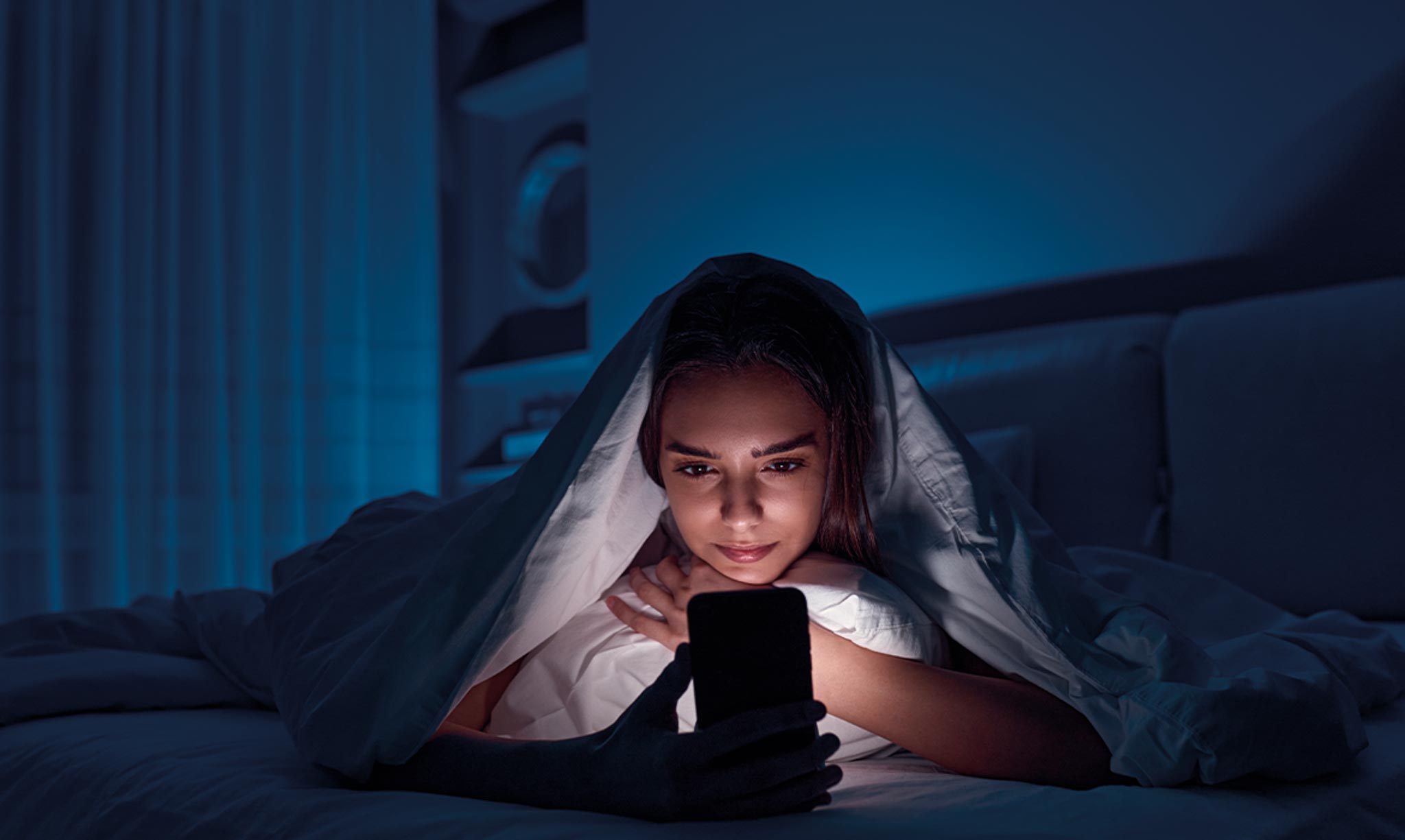
The alterations in sleep caused by screens go far beyond "not feeling sleepy" when it's time to go to bed. It is a deep deregulation of the circadian rhythm, the internal clock that dictates to our body when it should be active and when it should rest. The problem does not only lie in sleeping fewer hours, but in sleeping worse.


The use of devices, especially in the moments prior to rest, fragments the architecture of sleep, causing late onset of sleep, nighttime awakenings, and a feeling of unrefreshing sleep the next day.

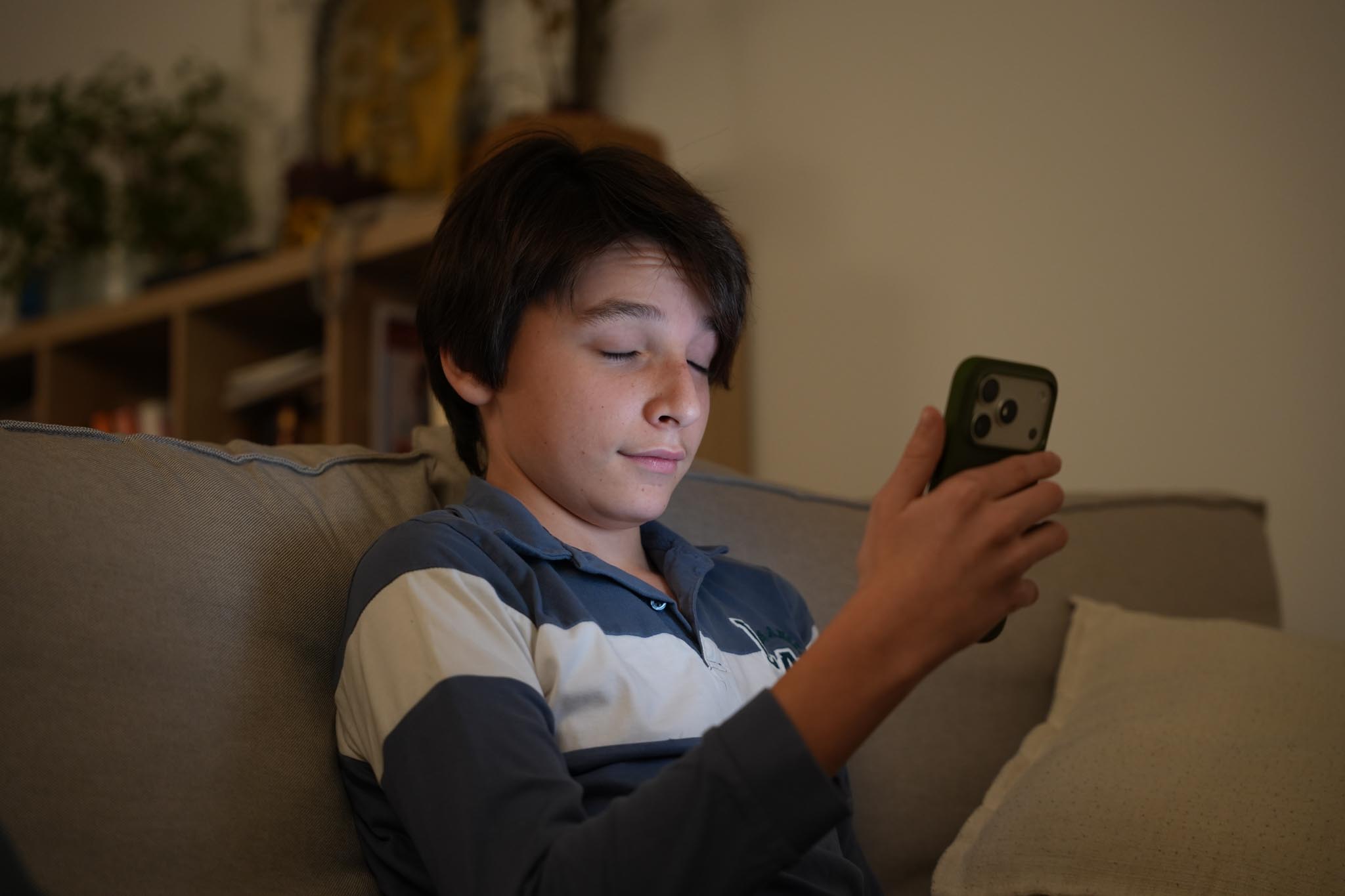
Consequences of an interrupted rest When this light interference becomes a nightly habit, the deficit of rest accumulates. The difficulty in falling asleep is no longer a one-time issue; it affects the depth and quality of sleep, reducing the phases of restorative sleep. The result is accumulated daytime fatigue that compromises performance, memory, and concentration the following day. It is important to note that this impact is even more severe in children and adolescents, whose circadian system is still developing and is more sensitive to these interruptions.

Group of men surfing

Dream

Inhibition of melatonin: Artificial light abruptly halts the production of this key hormone, responsible for inducing physiological sleep.

Delay of the rest signal: The body postpones the biological signal of "sleep onset," shifting our natural schedule in relation to the actual time.

+600,000 Protected Screens

Group of men surfing

Dream

Inhibition of melatonin: Artificial light abruptly halts the production of this key hormone, responsible for inducing physiological sleep.

Delay of the rest signal: The body postpones the biological signal of "sleep onset," shifting our natural schedule in relation to the actual time.

+600,000 Protected Screens

LONG-TERM EYE DAMAGE

LONG-TERM EYE DAMAGE

Unlike visual fatigue, which signals with immediate discomfort, long-term eye damage is a silent and cumulative process that does not always present obvious symptoms at first. It is directly associated with repeated and prolonged exposure to high-energy light (blue spectrum and part of the green spectrum), which acts day after day on our eyes.

Current studies indicate that, although screen use does not cause diseases immediately, it does promote biological conditions that increase the risk of suffering irreversible retinal damage, especially in situations of high daily exposure.


Prevent in a non-regenerating tissue

If exposure is maintained for years without protection, there can be a progressive loss of retinal integrity, leaving the eye more vulnerable to chronic visual alterations. This risk is especially relevant for people with a high daily screen load or advanced age. Therefore, the goal of protection is not to alarm, but to act with preventive logic: to reduce an avoidable risk factor in a vital tissue that does not give us a second chance.

Prevent in a non-regenerating tissue

If exposure is maintained for years without protection, there can be a progressive loss of retinal integrity, leaving the eye more vulnerable to chronic visual alterations. This risk is especially relevant for people with a high daily screen load or advanced age. Therefore, the goal of protection is not to alarm, but to act with preventive logic: to reduce an avoidable risk factor in a vital tissue that does not give us a second chance.

Prevent in a non-regenerating tissue

If exposure is maintained for years without protection, there can be a progressive loss of retinal integrity, leaving the eye more vulnerable to chronic visual alterations. This risk is especially relevant for people with a high daily screen load or advanced age. Therefore, the goal of protection is not to alarm, but to act with preventive logic: to reduce an avoidable risk factor in a vital tissue that does not give us a second chance.

World Lider Eye Protection

Envíos a más de 35 países

Envíos a más de 35 países

The risks described on this page are not based on hypotheses or business trends, but on more than two decades of experimental research and scientific collaboration.

The risks described on this page are not based on hypotheses or business trends, but on more than two decades of experimental research and scientific collaboration.

The risks described on this page are not based on hypotheses or business trends, but on more than two decades of experimental research and scientific collaboration.

Understanding biological mechanisms is the first step to developing real and responsible solutions.

Understanding biological mechanisms is the first step to developing real and responsible solutions.

Understanding biological mechanisms is the first step to developing real and responsible solutions.

→ See the scientific research

Free shipping on orders over €49.95 - Peninsula

Special discounts for groups

Customized Service Consult our experts

Projects made completely custom

JOIN OUR NEWSLETTER

By sending your email, you will stay updated on the latest scientific news and receive exclusive discounts and promotions.

Call us at 813 287 4867 Monday to Friday at 8:30 am to 5:30 pm EST

© 2025 Reticare. All Rights Reserved

Free shipping on orders over €49.95 - Peninsula

Special discounts for groups

Customized Service Consult our experts

Projects made completely custom

JOIN OUR NEWSLETTER

By sending your email, you will stay updated on the latest scientific news and receive exclusive discounts and promotions.

Call us at 813 287 4867 Monday to Friday at 8:30 am to 5:30 pm EST

© 2025 Reticare. All Rights Reserved

Free shipping on orders over €49.95 - Peninsula

Special discounts for groups

Customized Service Consult our experts

Projects made completely custom

JOIN OUR NEWSLETTER

By sending your email, you will stay updated on the latest scientific news and receive exclusive discounts and promotions.

Call us at 813 287 4867 Monday to Friday at 8:30 am to 5:30 pm EST

© 2025 Reticare. All Rights Reserved